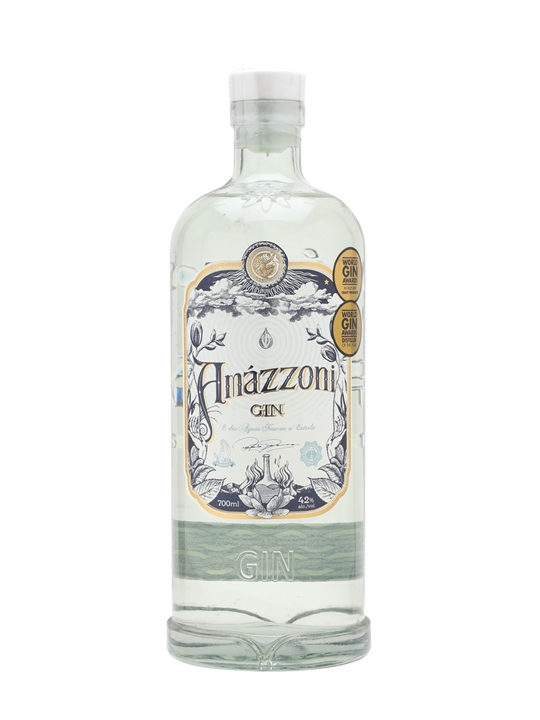

There's something genuinely thrilling about discovering a gin that bridges two worlds — the rigour of the London Dry tradition and the untamed character of Amazonian botanicals. Amazzoni Gin does exactly that, and it's a bottle that stopped me in my tracks the first time I poured it.
Where London Meets the Amazon
At its heart, Amazzoni is classified as a London Dry, which tells us something important about how it's made. That designation isn't about geography — it's a guarantee of method. All the botanical flavour must come from the distillation itself, with nothing added afterwards except water and a tiny amount of sugar. It's the most transparent category in gin, and it means what you taste in the glass is a direct reflection of the distiller's skill in balancing their recipe. The fact that Amazzoni's creators chose this exacting style while working with such unconventional ingredients speaks to real confidence in their craft.
A Botanical Bridge
The botanical bill here is fascinating. You've got your classical foundation — juniper berries, coriander, laurel — providing the structural backbone that any good London Dry needs. But then the recipe takes a sharp turn into the Brazilian rainforest with brazil nuts, maxixe (a cucurbit native to the Amazon basin that brings a gentle, vegetal freshness), and cipó cravo, a woody vine with warm, clove-like aromatics. Pink pepper adds a fragrant, almost floral heat, while tangerine lifts everything with bright citrus.
What I find particularly clever is the way these exotic botanicals aren't fighting the juniper — they're extending it. The resinous, piney heart of the spirit should find natural allies in the warmth of cipó cravo and the earthy richness of brazil nuts. At 42% ABV, there's enough strength to carry those heavier botanical oils without tipping into harshness.
Best Served
I'd reach for Amazzoni first when mixing a Gin & Tonic with a twist — literally. Pair it with a premium Indian tonic, a wheel of fresh tangerine rather than the usual lime, and a few lightly crushed pink peppercorns dropped into the glass. The tonic will open up those tropical botanicals beautifully. For something more ambitious, try it in a White Negroni, substituting Suze for Campari and using a dry vermouth. The nutty, spiced complexity of Amazzoni should give the drink an extraordinary depth. Even a simple Gimlet — two parts gin, one part fresh lime cordial, shaken hard over ice — would let that juniper-meets-jungle character shine.
At £38.50, Amazzoni sits in a competitive bracket, but the sheer originality of its botanical profile earns its place on the shelf. It's a London Dry that genuinely teaches you something new about what the category can be. I'm giving it a 7.5 out of 10 — a distinctive, well-crafted gin that rewards curiosity.