
Heritage & Distillery
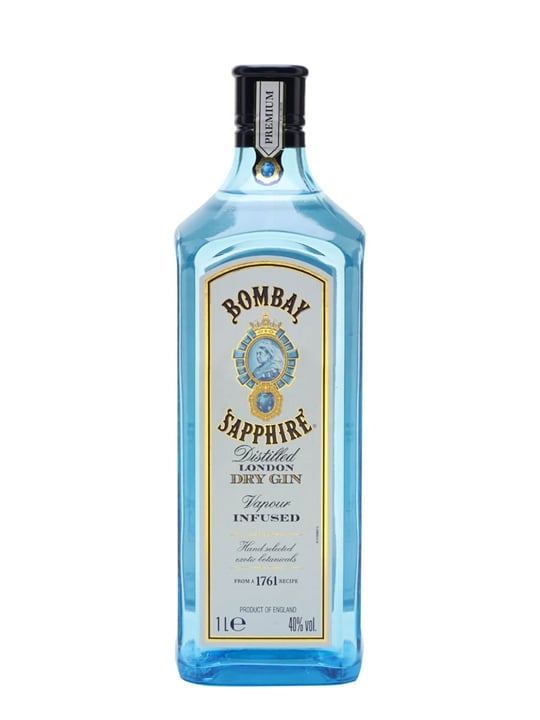
Bombay Sapphire was launched in 1987 by IDV (now Diageo), though it subsequently passed to Bacardi in 1998, where it has remained ever since. The brand was conceived as a premium repositioning of the existing Bombay Dry Gin, itself a respectable if unremarkable London Dry first produced in 1959. The genius of Sapphire lay not in the liquid alone — though the reformulated recipe is genuinely distinctive — but in the marketing and design. That blue bottle, inspired by the Star of Bombay sapphire, became one of the most recognisable silhouettes in the spirits world and played a significant role in rehabilitating gin's image among younger drinkers.
Since 2014, Bombay Sapphire has been distilled at Laverstoke Mill in Hampshire, a site with a history stretching back to the Domesday Book. The former paper mill — which once produced banknote paper for over forty countries — was transformed into a state-of-the-art distillery by Bacardi at a cost rumoured to exceed £20 million. The architectural centrepiece is a pair of glasshouses designed by Thomas Heatherwick, which house many of the botanical plants used in the gin's production. It is, without question, one of the most beautiful distillery sites in Britain.
Master Distiller Anne Brock has overseen production at Laverstoke since 2018, bringing a chemist's precision to a role that had previously been held by the legendary Yvonne Sherwood. Under Brock's stewardship, the core expression has remained consistent, while the distillery has expanded its range with various limited editions and the well-received Bombay Bramble.
Production
What distinguishes Bombay Sapphire from virtually every other major London Dry is its use of vapour infusion rather than direct steeping. The ten botanicals are placed in a perforated copper basket — the Carterhead still — positioned in the lyne arm of the still, above the pot. As the base spirit vapour rises, it passes through the botanicals, extracting their flavours and essential oils in a gentler, more delicate manner than traditional steeping achieves. The result is a notably lighter, more ethereal spirit in which the individual botanicals are more clearly delineated.
The ten botanicals themselves are well-chosen: juniper, lemon peel, grains of paradise, angelica, orris, coriander, cassia, cubeb berries, almonds, and liquorice. The inclusion of grains of paradise and cubeb berries — both members of the pepper family — gives Sapphire a distinctive spice character that sets it apart from more conventional London Dry recipes. These are not common botanicals in mainstream gin production, and they contribute significantly to the gin's individual identity.
Tasting Notes
On the nose, Bombay Sapphire is immediately distinguishable from its more assertive peers. The juniper is present but notably restrained — more green and herbaceous than the bold, resinous juniper of a Tanqueray or Beefeater. Lemon peel provides a clean, bright citrus note that sits right at the surface, and behind it, grains of paradise add an intriguing peppery warmth that is Sapphire's calling card. There is a subtle floral quality from the orris and angelica, and a very faint almond sweetness hovering in the background.
The palate is light-bodied and delicate — a direct consequence of the vapour infusion method. Juniper is soft and approachable, never aggressive, and coriander adds a gentle warmth. The cubeb berries and cassia combine to create a distinctive spice note at the mid-palate that is genuinely interesting — more complex than the nose might suggest. Liquorice rounds things gently, and the overall impression is one of elegance rather than power.
The finish is relatively short, clean, and dry. The juniper fades quickly, leaving behind a gentle warmth from the grains of paradise and a whisper of orris root dryness. It is refreshing rather than contemplative — a gin designed to move swiftly and leave the palate clean.
The Serve
Bombay Sapphire's lighter profile makes it an excellent gin for those who prefer a more delicate G&T. I would recommend Fever-Tree Indian Tonic at a 1:2 ratio with a generous squeeze of lime and a few cracked black peppercorns — the pepper echoes the grains of paradise and cubeb already present in the gin, creating a serve of real coherence.
In cocktails, Sapphire's delicacy can be both a strength and a limitation. It makes a refined French 75 — 50ml gin, 25ml lemon juice, 15ml sugar syrup, topped with champagne — where its lightness allows the wine to shine. However, in more spirit-forward drinks like a Negroni, it can struggle to hold its own against the Campari. Choose your cocktails accordingly.
Verdict
Bombay Sapphire occupies an interesting position in the gin landscape. It is, by design, a gentler, more approachable expression of London Dry — a gin that prioritises delicacy over intensity, breadth over depth. This approach has obvious appeal, and it is no accident that Sapphire has introduced more people to gin than perhaps any other brand of the modern era. Yet that same delicacy can feel like a limitation for more experienced gin drinkers seeking boldness and complexity. At its price point, it offers decent value and genuine versatility, particularly in lighter cocktails and long drinks. It may not be the most characterful gin on the shelf, but it is a well-made spirit with a clear identity, and the distillery at Laverstoke Mill is producing it with admirable consistency. Worth having in the rotation, if not necessarily at the front of it.