
First Impressions
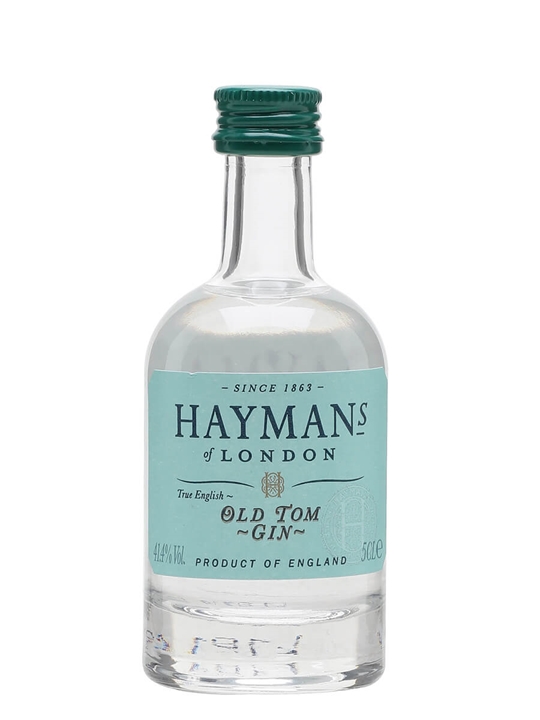
Old Tom gin occupies a fascinating place in the spirit's history — it's the missing link between the rough, sweetened gins of 18th-century London and the crisp, dry London Drys that dominate today. Hayman's version is one of the most respected modern recreations of the style, produced by a family that can trace its gin-making lineage back to the 1860s. Christopher Hayman, the current custodian of the family recipes, developed this Old Tom based on a recipe that's been in the family for over a century.
If you've never tried an Old Tom, this is where to begin. If you have, this is the version against which others should be measured.
The Distillery
Hayman Distillers is a family operation, currently in its fifth generation. They produce their gins in London using a two-day process: botanicals are steeped for a full day before a gentle, slow distillation on day two. This patient approach extracts fuller, rounder flavours from the botanicals and is particularly well-suited to the Old Tom style, where smoothness and sweetness are essential characteristics.
The sweetness in Hayman's Old Tom comes from the addition of sugar after distillation — a traditional method that distinguishes Old Tom from London Dry (where no sweetening is permitted). The amount is carefully calibrated: enough to soften and round the spirit, but not so much that it becomes a liqueur. It's a balancing act, and Hayman's gets it right.
Tasting
The nose signals the Old Tom style immediately. Juniper is present and clear, but it's wrapped in sweetness — not cloying, but noticeably softer than a London Dry. Sweet citrus peel, both orange and lemon, adds brightness, while liquorice root provides a rich, almost treacly depth. Cinnamon and nutmeg contribute warm baking-spice notes that give the nose a comforting, almost festive quality. There's a rounded quality to everything — no sharp edges, no aggressive top notes. It's inviting rather than challenging.
On the palate, the gentle sweetness defines the experience. Liquorice richness leads, providing a smooth, sweet foundation over which the other botanicals operate. Juniper has genuine authority here — Hayman's hasn't sacrificed gin identity for sweetness — and orange and lemon citrus add necessary brightness and lift. Warm baking spices (cinnamon, cassia, nutmeg) weave through the mid-palate, and the overall mouthfeel is smooth and rounded at 40% ABV. It drinks easily, perhaps too easily, which is both the style's charm and its potential danger.
What Hayman's Old Tom does exceptionally well is recreate the character of historical gin without the roughness that would have accompanied 19th-century production. The sweetness feels purposeful rather than compensatory. It's not hiding flaws in the spirit; it's expressing a legitimate style with craft and intention.
The finish is medium, with liquorice sweetness persisting alongside gentle spice and a clean juniper close. It's satisfying without being demanding.
How to Drink It
Old Tom gin's natural home is in classic cocktails — specifically, any cocktail from the pre-Prohibition era when Old Tom was the default gin style. A Tom Collins (the cocktail that's literally named after the style) is the obvious starting point: Hayman's Old Tom, fresh lemon juice, a touch of sugar syrup, and soda water. The gin's natural sweetness means you can reduce the syrup significantly compared to a London Dry version.
It's also the correct gin for a Martinez — the precursor to the modern Martini — where the sweetness harmonises beautifully with sweet vermouth and maraschino. In a Ramos Gin Fizz, the rounded character works brilliantly with the cream and egg white. As a G&T, pair it with a tonic that has moderate sweetness; East Imperial Old World or Fever-Tree Mediterranean both work well.
The Bottom Line
Hayman's Old Tom earns a 7 for its faithful recreation of a historical style and its excellent value at $30. It's well-made, well-balanced, and serves a specific purpose that few other gins can fill — namely, making classic cocktails the way they were originally intended. It doesn't score higher because the style itself, with its reliance on sweetness, offers less complexity and dynamic range than the best contemporary gins. But within its category, Hayman's Old Tom is a standard-bearer, and every serious gin collection should include a bottle.