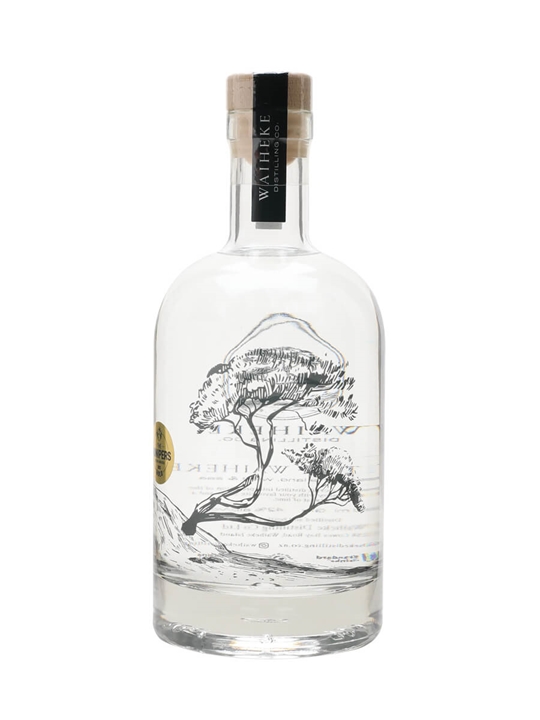

Spirit of Waiheke Dry Gin is a release that immediately signals its provenance — and in a category increasingly crowded with heritage-led London Drys, that coastal identity is precisely the kind of positioning that catches my eye. At 42% ABV, it sits at the accessible end of the spectrum, a deliberate choice that suggests this is a gin built for versatility rather than cask-strength theatrics.
A London Dry With Ocean Credentials
What makes this expression interesting from an industry perspective is the inclusion of giant kelp among its core botanicals. We've seen the maritime gin trend gather real momentum over the past few years — Harris, Tarquin's, and a clutch of Scandinavian distillers have all leaned into coastal botanicals with considerable commercial success. Spirit of Waiheke appears to be staking a claim in that space from the Southern Hemisphere, and the use of kelp alongside citrus and a hint of spice is a botanical bill that walks a careful line between novelty and drinkability.
The London Dry classification tells us something important here: despite the unconventional kelp addition, the distillers have committed to a juniper-forward backbone and a clean, redistilled character. That discipline matters. Too many coastal gins lose their structural integrity in pursuit of a concept. The fact that this has been built within the London Dry framework suggests a distilling team that understands the category's guardrails — juniper leads, and the supporting cast enhances rather than overwhelms.
Commercial Positioning
At a price point of roughly £50.75, Spirit of Waiheke sits in the premium-but-not-prohibitive bracket that has proven to be the sweet spot for independent gin brands. It's priced to compete with established craft offerings without venturing into the luxury territory where consumers demand aged expressions or limited-edition narratives. For a gin whose story is built around place and terroir — the coastal freshness of the Waiheke name, the kelp, the suggestion of sea air meeting citrus groves — that pricing feels commercially sound.
I'd score this at 7.9 out of 10. It's a well-constructed London Dry that brings genuine botanical interest to the table without losing sight of what the category demands. The kelp-and-citrus combination gives it a point of difference in an increasingly saturated market, and the restraint of that spice note suggests a considered approach to recipe development rather than a gimmick-first mentality.
Best Served
This is a gin that bartenders should reach for when building a classic G&T with a twist. A quality Indian tonic, a generous wedge of grapefruit, and perhaps a sprig of samphire if you want to lean fully into the coastal character. It would also hold its own in a Martini — the kelp's savoury edge and the citrus brightness should give it enough complexity to carry a dry serve without needing much embellishment. Commercially, it's the kind of bottle that works behind a bar as a conversation starter and on a shelf at home as a reliable evening pour.