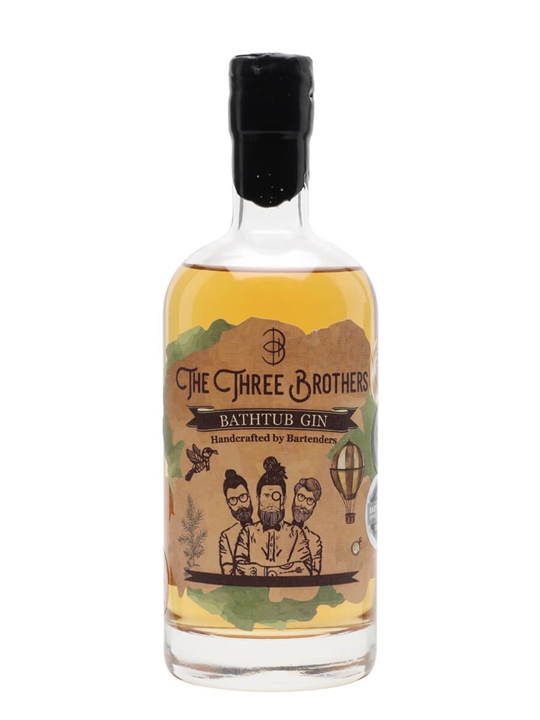

Three Brothers Bathtub Gin is one of those names that immediately signals a particular attitude — irreverent, small-batch, and unbothered by the conventions of the category it technically inhabits. It's classified as a London Dry, which in strict regulatory terms means a juniper-forward, naturally flavoured spirit with no post-distillation additions. At 40% ABV and a price point of £26.75, it sits squarely in the accessible end of the craft gin market, where competition is fierce and shelf space is earned through personality as much as pedigree.
The Botanical Story
What catches my attention here is the botanical bill. Juniper and coriander seed are the expected structural backbone of any London Dry worth the designation, but it's the supporting cast that tells the story. Jujube fruit is a genuinely unusual inclusion — you see it occasionally in East Asian spirits, rarely in Western gin. It brings a subtle dried-fruit sweetness and a rounded, almost date-like quality that should soften juniper's sharper edges. Olive leaves are another left-field choice, contributing a herbaceous, faintly bitter minerality that reads as Mediterranean rather than British. Layer in rose petals and lavender, and you have a gin that's clearly reaching for something floral and aromatic without abandoning its London Dry credentials.
Market Position
The craft gin boom has, if anything, intensified the pressure on brands to differentiate through botanicals. Three Brothers appears to be threading a specific needle: London Dry discipline with a botanical selection that leans exotic and floral. The 'Bathtub' moniker — a nod to prohibition-era improvisation — positions it as approachable and slightly playful, which works at this price bracket. Under £30, you're competing with a wall of gins jostling for the attention of adventurous but budget-conscious drinkers, and an unusual botanical story is one of the more effective ways to stand out.
Assessment
At 7.2 out of 10, Three Brothers Bathtub Gin earns its marks for ambition in botanical selection and for maintaining the London Dry framework while pushing into more unusual territory. The combination of jujube fruit and olive leaves is distinctive enough to warrant attention, and the floral elements of rose and lavender should provide aromatic lift. It loses a few marks on provenance — with no confirmed distillery or country of origin, the brand story has gaps that more transparent competitors are happy to fill. In an era where consumers increasingly want to know who made their gin and where, that opacity is a commercial risk.
Best served: A classic gin and tonic with a Mediterranean tonic water and a sprig of rosemary. The herbaceous garnish should complement the olive leaf and lavender botanicals, while the tonic's bitterness will balance the jujube's sweetness. It's the kind of straightforward serve that bartenders can execute quickly and customers will reorder — which, commercially, is what matters.