
Islay is not an easy place to reach. From Glasgow, it's a three-hour drive to Kennacraig, then a two-hour ferry crossing through the often-rough waters of the Sound of Jura. By the time you step off the CalMac ferry at Port Askaig, you feel like you've travelled to the edge of something — which, in geographical terms, you have. Islay is one of the most southerly of the Inner Hebrides, a flattened, wind-battered landscape of peat bog, rocky shoreline, and surprisingly green farmland.
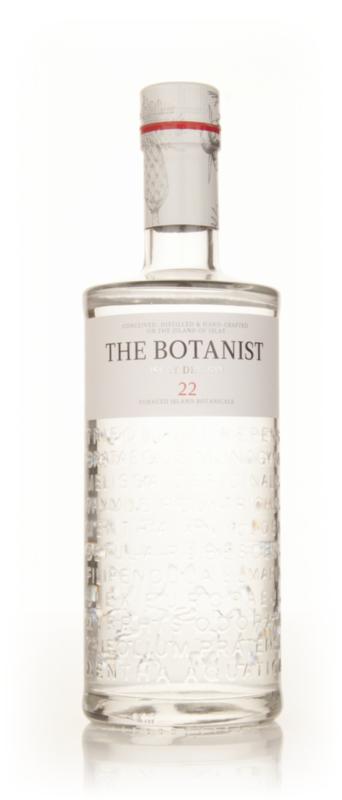
The island is famous, of course, for whisky. Eight working malt distilleries produce some of Scotland's most revered single malts — Laphroaig, Lagavulin, Ardbeg, Bowmore — and whisky tourism is Islay's economic lifeblood. But since 2010, the island has also been home to a gin that has become one of Scotland's most critically acclaimed: The Botanist.
22 From the Island
The Botanist is produced at Bruichladdich Distillery on the western shore of Loch Indaal, and its defining characteristic is its botanical bill: 22 wild botanicals, all hand-foraged on Islay itself, layered over 9 core gin botanicals sourced from further afield. The 22 local botanicals include bog myrtle, creeping thistle, chamomile, elder, gorse flower, heather, juniper, lady's bedstraw, lemon balm, meadowsweet, mugwort, peppermint, red clover, spearmint, sweet cicely, tansy, water mint, white clover, wild thyme, wood sage, apple mint, and downy birch.
It's a remarkable inventory, and the foraging required to gather it is equally remarkable. I joined the distillery's head forager, James Donaldson, on a morning's forage along the coast near Bruichladdich to understand the process.
A Morning's Forage
"We forage from April through October," James told me as we walked along a path above the rocky shoreline, the wind carrying the scent of salt and peat. "Each botanical has its own season — gorse flowers in spring, meadowsweet in summer, heather in late summer. You have to know the land and the calendar."
Within the first hundred metres, James had identified and collected three botanicals: wild thyme growing in a sheltered crevice between rocks, lady's bedstraw flowering in a grassy verge, and water mint growing at the edge of a stream. His knowledge of the landscape was encyclopaedic — he knew exactly where each plant grew, how much could be sustainably harvested, and when it would be at its aromatic peak.
"Sustainability is non-negotiable," he said, carefully cutting only a portion of each plant and leaving the root system intact. "We take what we need, never more. These plants have been growing here for thousands of years — we're borrowing from them, not taking from them."
From Field to Still
The foraged botanicals are brought back to the distillery and dried in a dedicated botanical room — a fragrant space where the aromas of Islay's wild plants mingle into something that smells simultaneously medicinal, floral, and deeply herbal. The dried botanicals are then loaded into Ugly Betty — the distillery's Lomond still, a rare piece of equipment that allows for a particularly slow, gentle distillation.
The slow distillation is crucial. With 31 botanicals in the mix (22 local plus 9 core), there's a risk of creating a muddled, confused spirit. The Lomond still's design — with its adjustable reflux plates — allows the distiller to capture a very precise cut of the distillate, selecting only the portion that achieves the desired balance of flavours.
The result is a gin that smells and tastes of Islay. Not of peat — there's no peat influence in The Botanist — but of the island's living landscape: its wildflowers, its herbs, its coastal air. It's a gin that captures a place more successfully than almost any spirit I've encountered.
The Whisky Question
I asked head distiller Adam Hannett — who also oversees Bruichladdich's whisky production — whether gin was a distraction from whisky or a complement to it.
"They're different expressions of the same philosophy," he said. "Bruichladdich has always been about terroir — about expressing the character of Islay in spirit form. With whisky, you do that through barley and maturation. With gin, you do it through botanicals. The destination is the same; the route is different."
An Island in a Bottle
Leaving Islay on the evening ferry, watching the island's low profile diminish across the darkening water, I poured a measure of The Botanist from a bottle I'd bought at the distillery. Neat, in a plastic cup, on the deck of a CalMac ferry — not the most elegant serve. But the gin tasted of the day: of thyme-scented coastal paths, of meadowsweet drying in a stone room, of an island that has been distilling spirits for centuries and shows no sign of stopping.
Some gins are made. The Botanist is gathered. That distinction makes all the difference.