
The door to the Nolet distillery in Schiedam opens onto a hallway lined with family portraits. Ten generations of Nolets look down from the walls — distillers all, stretching back to Joannes Nolet, who established the family business in this Dutch city in 1691. It is, by any measure, an extraordinary lineage, and one that places the Nolet family among the oldest continuously operating spirits producers in the world.
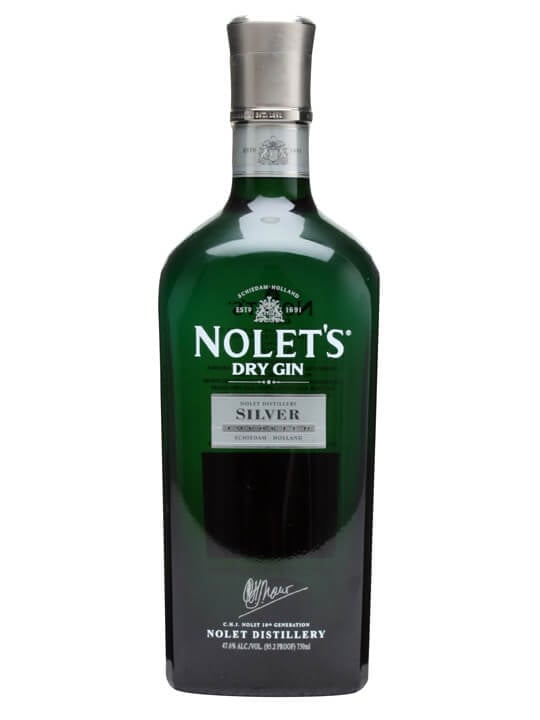
Most people know the Nolet name through Ketel One Vodka, the family's most commercially successful product. But the Nolets were gin and genever distillers long before they were vodka makers, and their return to gin with Nolet's Silver and Nolet's Reserve represents a homecoming of sorts — a reconnection with the family's original craft.
Schiedam: City of Spirits
Schiedam, a small city just west of Rotterdam, was once the gin capital of the world. In its 18th-century heyday, the city housed nearly 400 distilleries, producing the malt wine and genever that fuelled Dutch commerce and colonial expansion. The windmills that still dot the Schiedam skyline — the tallest in the world — were built to grind the grain that fed those distilleries.
Today, the number of active distilleries in Schiedam has shrunk to a handful, but the Nolet operation remains formidable. The distillery complex sprawls across several city blocks, blending historic buildings — some dating to the original 17th-century operation — with modern production facilities. The contrast between old and new is handled with characteristic Dutch pragmatism: everything serves a function, nothing is preserved for mere sentiment.
The Gin
Carolus Nolet Sr., the tenth-generation head of the family, made the decision to create a super-premium gin in the early 2000s. The result was Nolet's Silver, a gin that broke radically with both genever and London Dry traditions by featuring Turkish rose, peach, and raspberry as its headline botanicals — a combination that was considered eccentric at the time and is now recognised as visionary.
"My father wanted to create a gin that his daughters would enjoy," explained Carolus Nolet Jr., who now runs the business alongside his brother Bob. "Traditional gin can be quite masculine — very juniper, very dry. He wanted something more elegant, more floral."
The result divided purists. Juniper is present in Nolet's Silver, but it plays a distinctly secondary role to the rose and fruit botanicals. The gin is soft, perfumed, and undeniably beautiful, but traditionalists argued it stretched the definition of gin to breaking point. Carolus Jr. is sanguine about the criticism: "If juniper is present and it's distilled correctly, it's gin. The rest is style."
The Reserve
Nolet's Reserve Gin is another matter entirely. Priced at over £600 a bottle, it's one of the most expensive gins in the world — a spirit that positions itself alongside fine Cognac and aged single malt rather than other gins. Only a few hundred bottles are produced each year, and Carolus Sr. personally oversees every distillation.
I was not offered a taste of the Reserve during my visit — the distillery guards its stock carefully — but I did see the dedicated still in which it's produced: a tiny copper pot, immaculately maintained, that sits in a locked room accessible only to the Nolet family and their head distiller.
"The Reserve is my father's personal project," Carolus Jr. told me. "He selects the botanicals himself, he monitors every distillation, and he approves every batch. It's as close to a single-person gin as you'll find anywhere."
Tradition and Innovation
Walking through the Nolet distillery, what strikes you is the coexistence of deep tradition and restless innovation. The family's genever heritage informs everything — from the malt wine still that sits at the heart of the operation to the grain sourcing practices that have remained essentially unchanged for generations. But there's no conservatism here, no reluctance to experiment.
"Ten generations is a long time," Carolus Jr. reflected as we stood in the distillery's barrel ageing room. "Every generation has changed something. My great-grandfather introduced new distillation techniques. My grandfather expanded into export markets. My father created Ketel One and reinvented our gin. Each generation has the responsibility to build on what came before, not just preserve it."
The Future
The eleventh generation of Nolets is already involved in the business, though Carolus Jr. is diplomatically vague about succession planning. What's clear is that the family has no intention of selling — a rarity in an industry where family-owned distilleries are increasingly being acquired by multinational spirits companies.
"We've been offered," he admits with a slight smile. "More than once. But this business is our family's identity. You can't put a price on 330 years of history."
Leaving Schiedam, driving past the silent windmills and the canal-side buildings where 400 distilleries once roared, I felt the weight of that history. The Nolet distillery is not a museum — it's a living business, adapting and evolving as it has for more than three centuries. In the often ephemeral world of craft spirits, that kind of permanence feels almost miraculous.