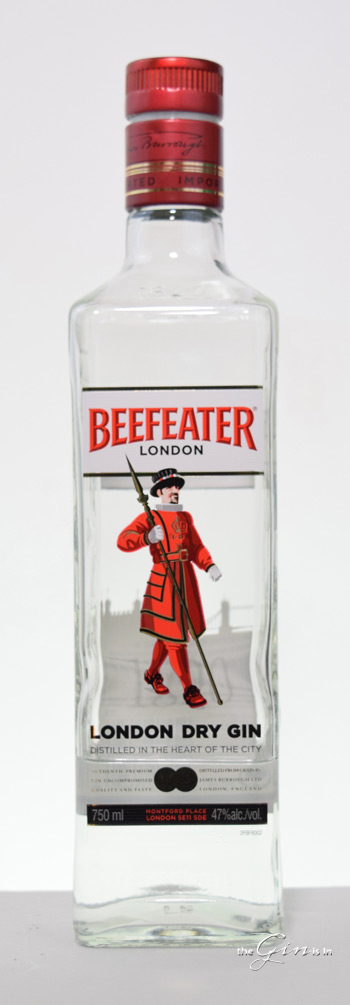

Beefeater 24 is the premium expression from James Burrough's legendary distillery, now based in Kennington, south London. The "24" refers to the steeping time — the twelve botanicals are macerated in the base spirit for a full twenty-four hours before distillation, significantly longer than the standard Beefeater process. This extended steeping extracts deeper, more complex flavours from the botanicals, and the result is a gin of considerable sophistication.
The botanical bill expands on the standard Beefeater recipe with the addition of Japanese sencha tea, Chinese green tea, and grapefruit peel. These additions, introduced by master distiller Desmond Payne (who held the role for over fifty years), give Beefeater 24 a distinctive aromatic complexity that sets it apart from both the standard Beefeater and other London Drys.
On the Nose
The nose is immediately more complex than the standard Beefeater. Juniper is present and correct — clean, bright, and classically London — but it is joined by an intriguing tea-like quality that adds an almost astringent, green note to the aromatics. The grapefruit peel provides a bittersweet citrus note that is more sophisticated than the lemon-orange combination of the standard expression. There is also a gentle spice from the coriander and a floral hint from the orris root that emerges after a moment in the glass.
The Palate
On the palate, Beefeater 24 delivers the depth that the extended steeping promises. The tea botanicals are more apparent here — they add a subtle tannin structure that gives the gin a textural complexity unusual in London Dry. The juniper is firm and authoritative, providing the backbone, while the grapefruit peel adds a bittersweet mid-palate note that is utterly distinctive. The overall flavour profile is richer and more layered than the standard Beefeater, with the 45% ABV providing ample body to carry the botanicals.
The Finish
The finish is long and satisfying. The tea tannins persist, creating a dry, slightly astringent quality that is reminiscent of a fine green tea. Juniper lingers alongside, and the grapefruit provides a final bitter-citrus flourish. The finish has a contemplative quality — it rewards attention and reveals new nuances each time.
Versatility
Beefeater 24's tea notes make it particularly interesting in cocktails. In a Martini, those tannins add a savoury depth that plays beautifully against dry vermouth. In a gin and tonic with grapefruit garnish, the citrus notes create a harmonious echo. And in a Negroni, the tea's astringency complements the Campari's bitterness, creating a drink of remarkable complexity.
Desmond Payne's legacy at Beefeater is one of quiet, consistent excellence, and Beefeater 24 may be his finest achievement. It is a gin that respects the London Dry tradition while pushing it forward — not through fashionable exoticism but through depth, precision, and the simple but profound insight that steeping botanicals for longer makes them say more. This is masterful distilling.