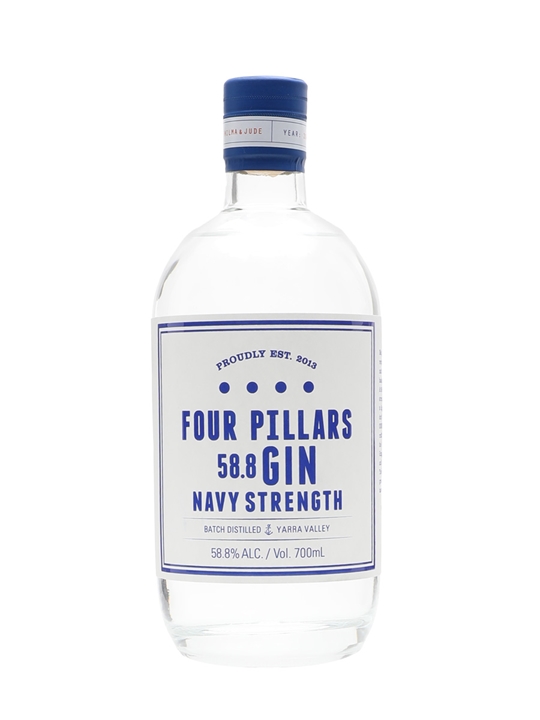
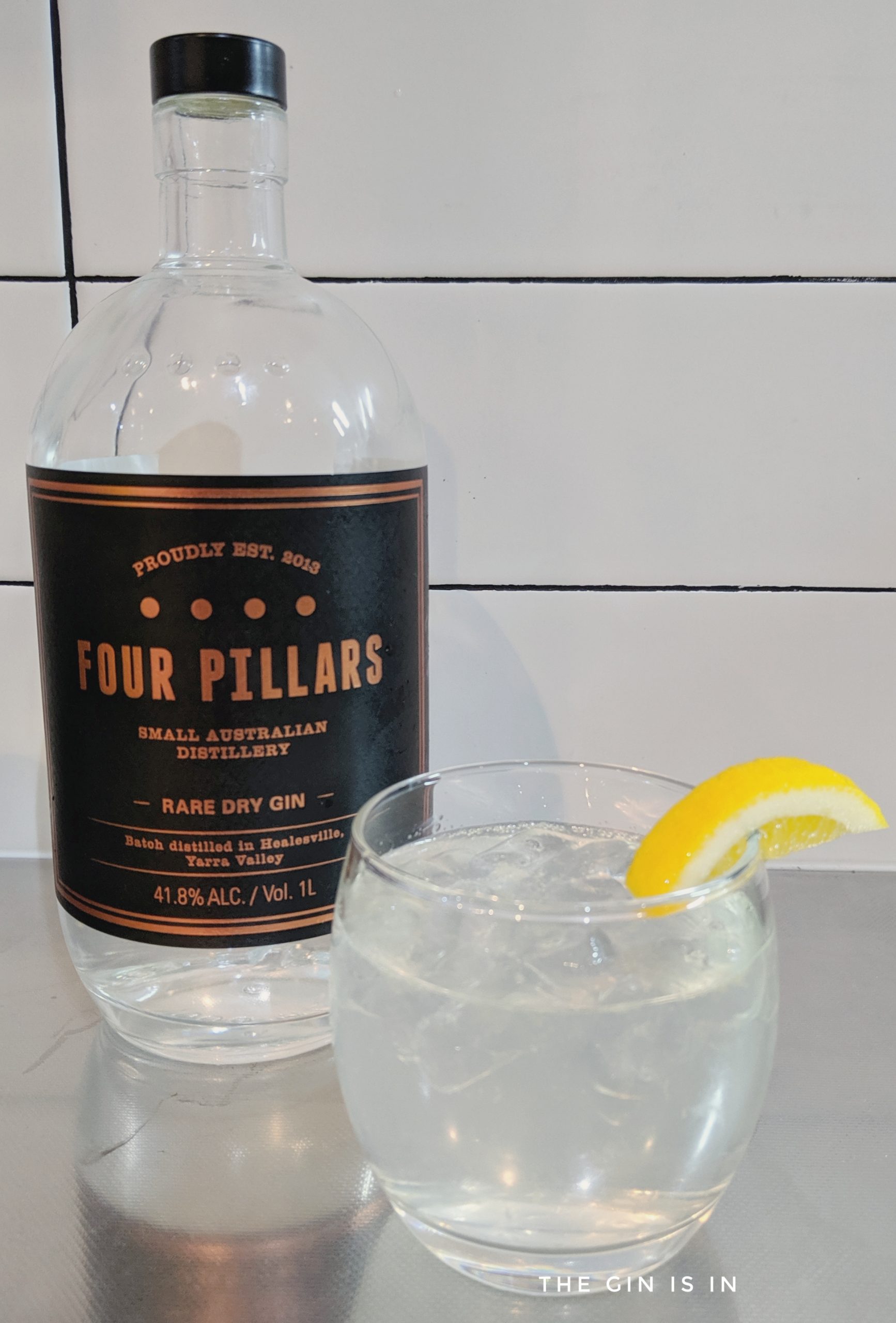

Australian gin has announced itself on the world stage with a commanding performance at the 2025 International Wine & Spirit Competition, claiming five gold medals and twelve silvers in what judges described as the strongest showing from any non-European country in the competition's history. Four Pillars took two golds — for its Rare Dry Gin and the Bloody Shiraz Gin — while Archie Rose won gold for its Signature Dry Gin, and Adelaide Hills Distillery claimed two golds for its 78 Degrees Classic and Green Ant Gin. It was a result that confirmed what those of us who have been tracking Australian spirits already knew: this country makes gin of genuinely world-class quality.
I was in Melbourne last month for the Australian Distillers Conference and had the opportunity to taste across the country's gin landscape. The depth and quality is remarkable, and the IWSC results merely formalise what the palate already knew.
The Details
Four Pillars' double gold was, in some ways, the least surprising element of the Australian haul. The Healesville-based distillery, founded in 2013 by Stuart Gregor, Cameron Mackenzie, and Matt Jones, has been accumulating international awards for the best part of a decade. Its Rare Dry Gin — built on a botanical bill that includes whole fresh oranges, Tasmanian pepperberry, and lemon myrtle — is widely regarded as one of the finest gins produced outside Europe.
"We've always believed that Australian botanicals are the equal of anything grown in the Mediterranean or the Himalayas," said Mackenzie, Four Pillars' Head Distiller. "Lemon myrtle, pepperberry, finger lime, wattleseed — these are ingredients with incredible complexity and flavour. The IWSC golds are a validation of that belief, but honestly, we've known it since our first distillation."
The gold for Bloody Shiraz Gin — a divisive but undeniably distinctive product made by steeping Yarra Valley shiraz grapes in gin — was particularly satisfying for the team. "People either love Bloody Shiraz or they think it's madness," Gregor admitted. "A gold medal at the IWSC suggests the judges lean towards love."
Archie Rose's gold for its Signature Dry Gin was a milestone for the Sydney-based distillery, which has built a devoted following in Australia but has been less well-known internationally. The Signature Dry uses native river mint and blood lime alongside traditional botanicals, creating a gin that is recognisably Australian without being exotically so.
"We wanted to make a gin that could convert London Dry purists while showcasing Australian ingredients," said Dave Withers, Archie Rose's Master Distiller. "The gold tells us we've got the balance right."
Perhaps the most intriguing of the five gold medals went to Adelaide Hills Distillery's Green Ant Gin. Yes, green ants. The gin uses the heads of green ants, sustainably harvested by indigenous communities in the Northern Territory, as a key botanical. The ants contribute a vivid lime-like citrus note that is unlike anything else in the gin world.
"People raise an eyebrow when you tell them there are ants in their gin," said Sacha La Forgia, Adelaide Hills' Head Distiller. "Then they taste it, and the conversation changes entirely. The ants produce a natural citric acid that gives the gin an extraordinary brightness and freshness."
Industry Context
Australia's gin industry has grown with startling speed. The country had fewer than 10 gin distilleries in 2014; today it has over 250. The growth mirrors the trajectory of Australian craft beer and wine — industries where Australian producers have consistently punched above their weight internationally by combining technical excellence with a willingness to experiment.
The country's unique advantage is its botanical diversity. Australia is home to the world's oldest continuous plant cultures, and indigenous Australians have used native botanicals for food, medicine, and ceremony for over 60,000 years. The incorporation of these botanicals into gin — finger lime, lemon myrtle, Tasmanian pepperberry, wattleseed, strawberry gum, and dozens more — gives Australian gin a flavour palette that is genuinely distinctive and essentially impossible to replicate elsewhere.
"Australian gin has a terroir advantage that's hard to overstate," said Philip Raimondo, founder of the Australian Gin Distillers Association. "Our botanicals are unique to this continent. You can make a London Dry anywhere in the world, but you can only make an Australian gin here."
Export growth has been strong. Australian gin exports grew by 38% in 2025, with the UK, United States, and Singapore the primary markets. Four Pillars now exports to 25 countries, and Archie Rose has recently entered the UK market through a partnership with Speciality Brands.
The on-trade has been a crucial driver. Australian cocktail bars — particularly in Melbourne and Sydney — have embraced local gin with an enthusiasm that borders on patriotism. Gin Palace in Melbourne, widely regarded as one of the world's best gin bars, stocks over 100 Australian gins alongside its international selection. This kind of domestic advocacy creates a virtuous cycle: strong home demand builds brands, which then have the credibility and scale to compete internationally.
What's Next
The IWSC golds will accelerate Australian gin's international push. Four Pillars is planning to open an international flagship — likely in London — within the next 18 months. Adelaide Hills is in discussions with distributors in Germany and Scandinavia. And a new wave of smaller Australian distillers, including Never Never Distilling Co, Patient Wolf, and Bass & Flinders, are eyeing export markets.
The Australian government has also signalled support for the spirits export sector, with a recently announced £12 million trade promotion programme that includes gin alongside whisky and rum. This government backing, combined with the marketing firepower of IWSC gold medals, could prove transformative.
For the global gin consumer, the message is clear: if you have not yet tried Australian gin, you are missing one of the most exciting chapters in the spirit's long history. Five gold medals from the IWSC is not a fluke. It is a statement of arrival.