
First Impressions
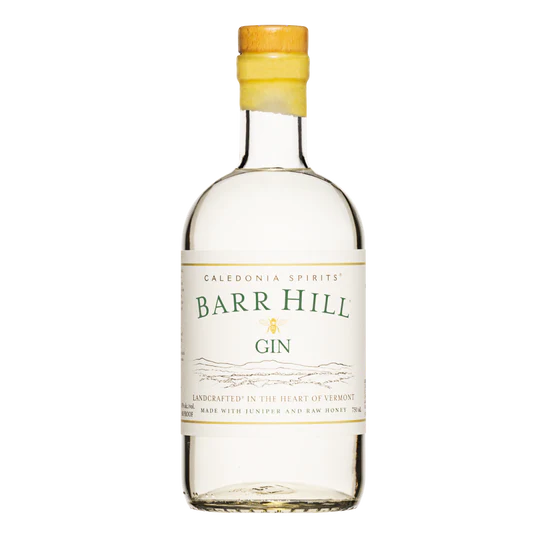
Todd Hardie kept bees for over 50 years, managing 1,900 colonies across Vermont's Champlain Valley as the state's apiary inspector. His vision: capture the countless botanicals foraged by honey bees into a bottle of gin. With distiller Ryan Christiansen, he founded Caledonia Spirits in Hardwick, Vermont in 2011. The recipe is radical minimalism — corn spirit, juniper, and raw Northern honey added post-distillation (not in the still). Each batch carries a faint straw hue from the honey, and because the bees forage different flowers by season, no two batches are identical.
Tasting
Pine leaps from the glass immediately — heavy juniper with beeswax and dried fir needles. On the palate, the viscosity is the first surprise: luscious and surprisingly robust from that raw honey. Pine and grass at the tip of the tongue give way to wildflower honey with green leafiness, then darker resinous juniper blooms across the palate with real warmth. The finish is extraordinary — over a minute long, juniper burning out very slowly, rich and warm.
The Bottom Line
Barr Hill earns a 9 for proving that three ingredients can create something more complex than most gins manage with twenty. The first ever 100-point score in USA Spirits Ratings history, Spirit of the Year 2020, and self-described as America's most awarded gin — the accolades merely confirm what the glass already tells you. Todd Hardie told Boston Magazine: "In spring you might get heavier notes of apple or maple syrup, while in the summer you're bound to get something greener and pinier because of the bees' diet of alfalfa and milkweed." Now distilled on Gin Lane in Montpelier (yes, the actual street name), sealed with raw beeswax. This is what happens when a beekeeper dreams in juniper.