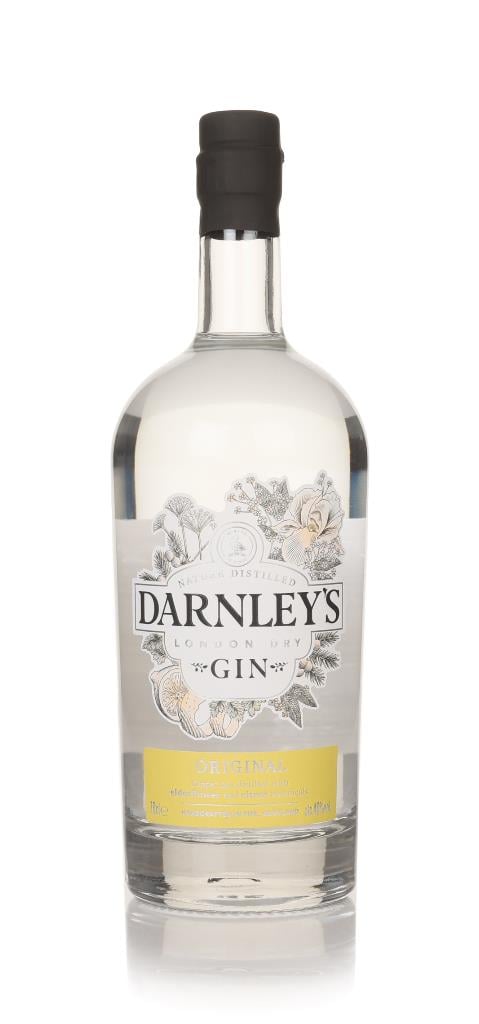

First Impressions
Darnley's gin takes its name from Lord Darnley — the husband of Mary Queen of Scots — who first met his future wife at Wemyss Castle in Fife in 1565. The Wemyss family, better known as whisky merchants and blenders, created this gin as an extension of their spirits portfolio, and the historical pedigree is matched by a refreshingly straightforward approach to the spirit itself.
Six botanicals. No gimmicks. A London Dry that happens to be Scottish in conception if not in distillation — the original recipe was produced at Thames Distillers in Clapham, London, though the brand has since moved closer to home with their own cottage distillery next to Kingsbarns in the East Neuk of Fife.
The Distillery
The gin was originally distilled under contract by Thames Distillers Ltd in London — one of the capital's most respected gin distilleries — using a copper pot still. The botanical bill is deliberately minimal: juniper, elderflower, Spanish lemon peel, Moroccan coriander seed, angelica root, and orris root. It is the elderflower that provides Darnley's point of differentiation — a botanical that modifies the juniper-forward expression just enough to create distinction without abandoning the London Dry framework.
The Wemyss family has since established a dedicated gin distillery in Fife, offering visitors the opportunity to experience Scottish gin-making in a restored cottage alongside the Kingsbarns whisky distillery. It is a setup that speaks to a family that takes its spirits seriously.
Tasting
The nose is classically structured. Juniper leads with confidence, accompanied by warm white pepper and strong coriander that give it an assertive, aromatic character. Sage adds an herbal dimension, and good lemon notes provide brightness without the aggressive citrus intensity that some London Drys pursue. There is a composed quality to the nose — nothing jostles for position, everything has its place.
On the palate, the gin opens with a classically London Dry character — crisp, clean, juniper-forward. But as the citrus falls away, the elderflower emerges, bringing a sweetish, spritely quality that lifts the mid-palate. Warm ginger follows, adding subtle heat, and the mouthfeel throughout is notably creamy — a textural quality that belies the modest botanical count. There is a softness here that makes it extremely approachable without sacrificing complexity.
The finish is round, smooth, and warm — surprisingly delicate. The assertive pepper found on the nose gives way to something gentler as elderflower lingers with quiet persistence. The simplicity of the dryness allows the individual flavours of angelica and orris root to make themselves heard, quietly but distinctly. It is a finish that rewards patience.
How to Drink It
Darnley's is a Martini gin. The creamy mouthfeel and elderflower elegance shine in a 4:1 dry Martini with a lemon twist — the citrus in the garnish amplifies the lemon peel botanical beautifully. It is also a natural candidate for an Elderflower Collins: Darnley's, fresh lemon juice, elderflower cordial, and soda water over ice.
In a G&T, use a clean Indian tonic and garnish with a sprig of fresh elderflower if you can find it, or a cucumber ribbon if not. The delicate florals respond well to minimal intervention.
The Bottom Line
Darnley's London Dry earns a 7.5 for demonstrating that restraint and elegance can be more compelling than botanical excess. The six-ingredient bill is a model of economy — every botanical justifies its inclusion, and the elderflower provides a genuine point of distinction without undermining the gin's London Dry credentials. It is not a gin that demands attention through novelty; it earns it through quality, balance, and a creamy texture that makes it one of the most mixable gins in its price range. The Wemyss family's whisky heritage — an understanding that great spirits come from patience and precision — is evident in every sip.