
First Impressions
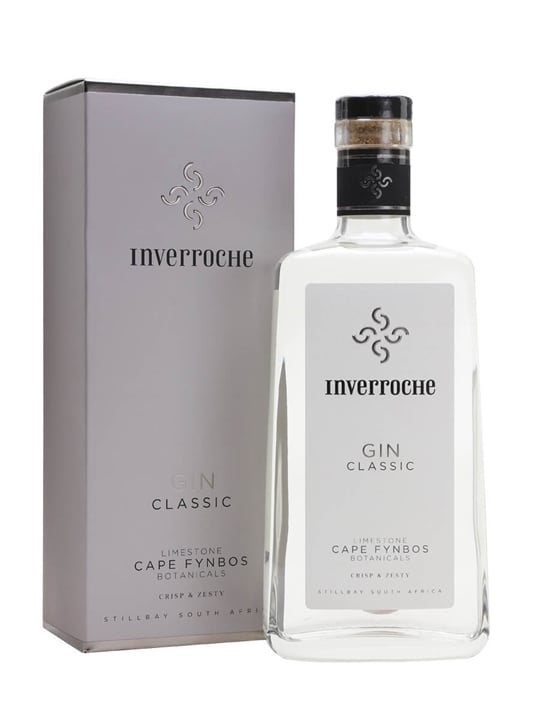
The Cape Floral Kingdom is the smallest of the world's six floral kingdoms, yet contains more plant species per square metre than anywhere on Earth. Fynbos — the shrubland vegetation unique to this region — includes over 9,000 species, many of which grow nowhere else. In 2012, Lorna Scott became the first person to distil gin with these botanicals, founding Inverroche Distillery in Stilbaai with her son Rohan and daughter Lauren. She pioneered an entirely new category. 70% of her staff are women employed from the local community. Pernod Ricard acquired full ownership, making Inverroche their first wholly owned African spirit brand.
Tasting
Amber uses 20-30 different coastal fynbos varieties — botanicals from the shoreline rather than the mountains, vapour-infused during distillation, then further infused post-distillation to create the distinctive golden colour. The nose is juniper balanced with honeyed sweetness, herbal fynbos notes and subtle citrus with warm spice. On the palate, smooth and full-bodied with layers of complexity: honey, herbs, gentle spice and earthy undertones that evolve as you sip. The coastal fynbos adds a quality that defies easy description — part herbal, part floral, part something entirely South African. The finish is warming with pleasant sweetness and lingering botanical notes.
The Bottom Line
Inverroche Amber earns an 8 for genuine botanical innovation and extraordinary terroir. No other gin on Earth can taste like this because fynbos grows nowhere else. Lorna Scott did not just make a new gin; she created a new category of gin-making that has since inspired dozens of South African distillers. Best sipped neat, over ice, or in a Negroni where the amber colour and honeyed complexity replace Campari's bitterness beautifully. The Cape Floral Kingdom in a glass.