
First Impressions
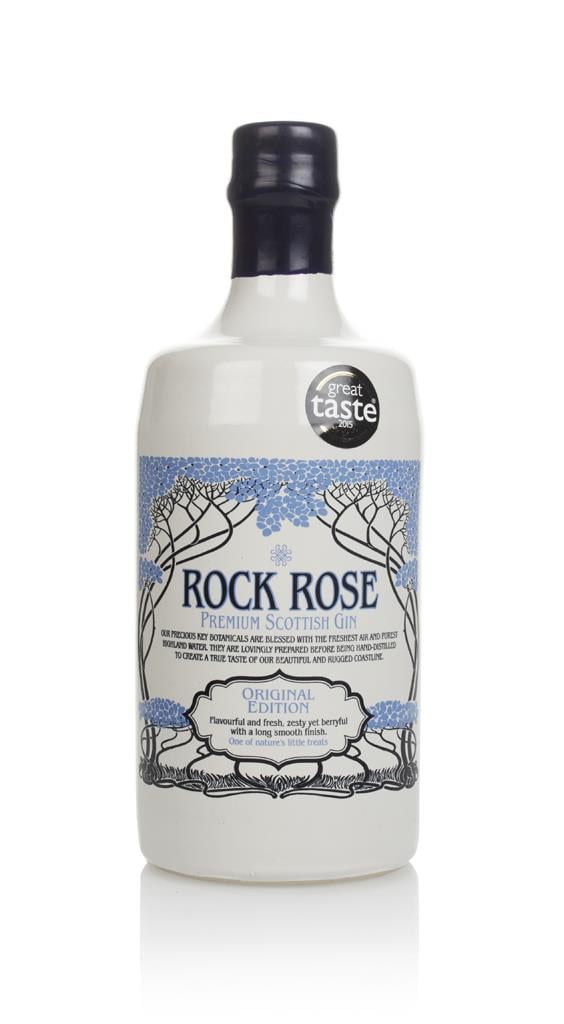
Rock Rose Gin is made at Dunnet Bay Distillery — the most northerly distillery on the British mainland, perched on the wild Caithness coast of Scotland. Founded by husband and wife team Martin and Claire Murray, it is the kind of distillery that could only exist in the age of craft spirits: a small, passionately run operation in a remote location, using the landscape itself as its botanical garden.
The name comes from Rhodiola rosea — a flowering plant that grows on the cliffs and coastline around Dunnet Bay, and one of the gin's key botanicals. After testing 80 different botanicals across 55 trial recipes, the Murrays settled on a bill of 18 that captures the wild, windswept character of Britain's northern coast. The commitment to that process tells you everything about the care behind this gin.
The Distillery
Dunnet Bay Distillers sits on the coast of Caithness, overlooking Dunnet Bay and the Pentland Firth. Many of the botanicals are foraged locally: Rhodiola rosea from the coastal cliffs, rowan berries from the surrounding Highland landscape, blaeberries (the Scottish wild blueberry) from the moors, and sea buckthorn from the shoreline. These join more conventional gin botanicals — Italian and Bulgarian juniper, coriander seed, cardamom, and verbena — to create a bill that is rooted in both tradition and place.
The gin is distilled in small batches, and each bottle carries the marks of genuine artisanal production. This is not a gin that can be scaled infinitely — the foraged botanicals impose natural limits on production.
Tasting
The nose is immediately refined. A delicate bouquet of rose — the Rhodiola making its presence felt — mingles with deeper cardamom warmth and a touch of citrus brightness. It is an inviting, layered nose that speaks of both the floral and the spiced, with the rose providing an elegance that sets the tone for what follows. There is nothing heavy-handed here; the 18 botanicals are already demonstrating their ability to work in harmony.
On the palate, fruity berries — the rowan, blaeberry, and sea buckthorn making their collective contribution — merge with the floral nose to create a full-bodied, rounded gin of genuine character. There are bright, slightly sour notes as the juniper comes to the fore, asserting its authority without drowning the more delicate botanicals. A warming heat builds through the mid-palate, and there is depth and complexity from all the flavours working in harmony. The 41.5% ABV provides sufficient body for the botanical complexity without any harshness.
The finish is a lovely surprise: subtly creamy, with vanilla notes that provide a smooth, gentle conclusion. The long, smooth quality of the finish belies the wildness of the gin's origins — it is sophisticated where you might expect rugged, and that contrast is part of Rock Rose's charm.
How to Drink It
Rock Rose makes a magnificent G&T. Use Fever-Tree Indian Tonic and garnish with a slice of orange and a sprig of fresh rosemary — the herbal notes in the garnish connect with the gin's wild botanical character. The berries and florals bloom beautifully in this serve.
For cocktails, the rose and berry character makes it a natural fit for a Bramble — the crème de mûre finds harmonious partners in the rowan and blaeberry. It also makes an excellent Clover Club, where the raspberry syrup amplifies the fruit notes, and a stunning French 75, where the floral elegance takes flight in champagne.
The Bottom Line
Rock Rose earns an 8 for delivering a gin of genuine terroir — you can taste the Caithness coast in this bottle, from the wild berries to the cliff-growing Rhodiola rosea. The 18-botanical bill is expertly balanced, the foraged ingredients add genuine distinction, and the creamy vanilla finish is a delightful counterpoint to the wild character of the earlier botanicals. At around £35, it represents excellent value for a gin of this quality and provenance. Martin and Claire Murray have created something special on the northern edge of mainland Britain — a gin that proves you do not need to be in London to make world-class spirits.