
First Impressions
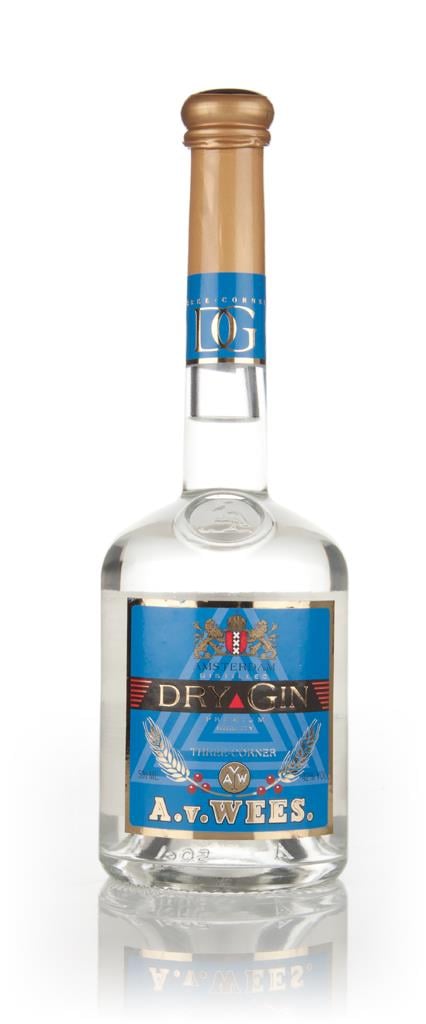
Van Wees Three Corners Dry Gin makes Death's Door's three botanicals look positively extravagant. This gin uses just two: juniper and lemon. Two ingredients. From a distillery in Amsterdam that has been operating since 1782 — A. van Wees Distillery de Ooievaar, the last authentic distillery remaining in the city. The Three Corners name refers to the historic 'Three Corner' area of Amsterdam where the distillery sits, and the gin embodies a Dutch directness that strips away everything unnecessary to reveal the pure essence of juniper and citrus.
It is the kind of gin that either fills you with excitement or trepidation. With only two botanicals, there is absolutely nowhere to hide. Every flaw would be exposed, every imbalance magnified. That it succeeds as brilliantly as it does is a testament to over 240 years of distilling expertise.
The Distillery
A. van Wees Distillery de Ooievaar — 'The Stork' — has been producing traditional Dutch spirits in Amsterdam since 1782. They are primarily known for their Old Dutch genevers, and the Three Corners Dry Gin draws on that deep heritage of juniper-based spirit production. The gin is distilled from grain with juniper berries and lemons — botanicals that were used in the 17th century, giving the gin an historical authenticity that few modern producers can claim. At 42% ABV, it is bottled at a strength that gives the two botanicals room to express themselves.
Tasting
The nose is a study in purity. Clean, with pine juniper firmly to the fore — this is juniper at its most eloquent, unburdened by competing botanicals. Zesty lemon citrus supports from beneath, and there is a faint lavender note that may emerge from the interaction between the two botanicals during distillation. It is a nose of remarkable clarity — two notes played in perfect harmony.
On the palate, the gin is beautifully clean, balanced, majestic, and restrained in its delivery. The word 'majestic' is not one I use lightly, but it is the right word here. Piney juniper is presented with absolute conviction — confident, authoritative, and deeply satisfying. A backbone of citrus zest provides structure and brightness without ever attempting to take the lead. There is a subtle, tingling white pepper zing — a quality that emerges naturally from high-quality juniper — that adds a tactile dimension. The simplicity is the complexity: with only two ingredients, every nuance of the juniper and every note of the lemon is perceptible, creating a drinking experience of extraordinary transparency.
The finish is surprisingly long and warming — remarkable for a gin with such a minimal botanical bill. The juniper persists with gentle authority, and the lemon provides a clean, refreshing conclusion. There is none of the bitter tailing that can afflict gins with too many competing botanicals; the finish is as pure as the nose.
How to Drink It
This gin demands a Martini. The two-botanical purity makes it ideal for the drink that most brutally exposes a gin's quality — try it at 5:1 with dry vermouth and a twist of lemon. The result is a Martini of startling clarity and poise. In a G&T, use the cleanest tonic you can find — Fever-Tree Indian or Schweppes — and garnish with a twist of lemon. Nothing more. The gin needs no help.
I would also recommend trying it neat, at room temperature, as an exercise in tasting. Understanding what juniper and lemon alone can achieve will change how you taste every other gin.
The Bottom Line
Van Wees Three Corners earns an 8 for proving that two botanicals, in the hands of a distillery with 240 years of experience, can produce a gin of genuine majesty. The purity, clarity, and balance are exceptional — this is gin reduced to its absolute essence, and the essence turns out to be magnificent. At around £35, it is a bottle that every serious gin drinker should own, if only to recalibrate their palate and remember what juniper, at its best, can do. From Amsterdam's last authentic distillery, a gin that needs nothing more than it has.