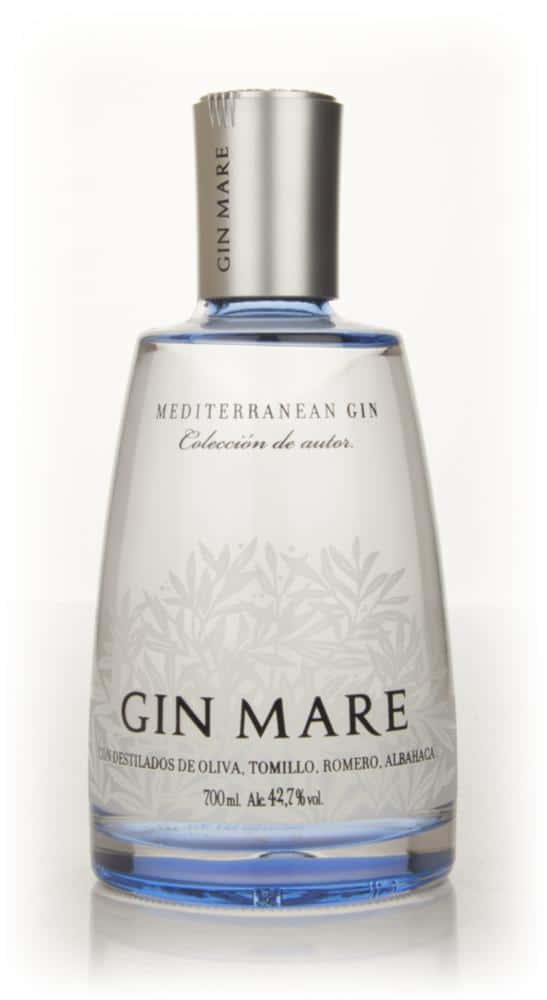


A bottle of London Dry gin is a small atlas. Pick any well-known expression and trace its botanicals back to their origins, and you will find yourself drawing lines across a map that spans continents. The juniper may come from Macedonia or Albania. The coriander from Morocco or Romania. The cardamom from Guatemala or southern India. The citrus peel from Spain or Sicily. The angelica root from Saxony or Poland. The orris root from Tuscany, where it has been cultivated for centuries.
These botanical supply chains are the hidden infrastructure of the gin industry, and they tell a story about global trade, agricultural tradition, and the remarkable persistence of very old commercial relationships. I spent several months following these chains, from spice markets to distillery loading docks, and what I found was a network of extraordinary complexity and surprising fragility.
Coriander: The Moroccan Connection
Morocco produces the majority of the coriander seed used in European gin production. The growing region is concentrated in the Fès-Meknès area, where the climate — hot, dry summers and cool winters — produces seeds with the high essential oil content that distillers prize. The Moroccan crop is harvested in June and July, dried in the sun, and shipped primarily through the port of Casablanca to buyers in London, Hamburg, and Amsterdam.
I visited a coriander farm outside Fès in early summer, during the harvest. The fields stretched to the horizon, the plants waist-high and heavy with seed. The farmer, Hassan Benchekroun, whose family has grown coriander for four generations, showed me the drying process — the cut plants laid on concrete floors in the sun, turned daily, then threshed by hand to separate the seeds.
"The gin people want the small seeds," he told me. "They say the small ones have more flavour. The big ones, we sell for cooking." He seemed amused by the distinction, though the price differential — gin-grade coriander commands roughly double the cooking-grade price — gave the amusement a commercial edge.
Cardamom: The Guatemala-India Axis
Cardamom in gin comes primarily from two sources: Guatemala, which is the world's largest producer, and the Cardamom Hills of Kerala, India, which is the original homeland of the spice. Guatemalan cardamom tends to be slightly milder and more eucalyptus-forward, while Indian (Malabar) cardamom is more intensely aromatic, with stronger notes of citrus and camphor.
The Guatemalan cardamom industry was established by German immigrants in the early twentieth century, and it now represents one of the country's most important agricultural exports. The pods are grown at altitude in the rainforests of Alta Verapaz, harvested by hand, and dried over wood fires — a process that gives Guatemalan cardamom a subtle smokiness that distillers either prize or seek to avoid, depending on their preferences.
Angelica Root: The Saxon Tradition
Angelica root, gin's great fixative — the botanical that binds the other flavours together and extends the finish — comes primarily from the flatlands of Saxony in eastern Germany and from Poland. The plant, Angelica archangelica, takes two years to reach maturity, and the roots must be carefully dried to preserve their essential oils.
In the Saxon town of Aschersleben, I visited one of Europe's largest angelica root suppliers. The warehouse smelled intensely of earth and celery — angelica's characteristic scent — and contained thousands of dried roots, sorted by size and quality, awaiting shipment to gin distillers across the continent.
Orris Root: Tuscany's Patient Crop
Perhaps the most remarkable botanical supply chain in gin belongs to orris root — dried iris root that serves as both a fixative and a source of delicate, violet-like flavour. Orris root is grown almost exclusively in Tuscany, around the town of San Polo in Chianti, and it requires a patience that no other gin botanical demands: the roots must be dried for three to five years before they can be used.
This extended drying period means that orris root is astronomically expensive — the most costly botanical in most gin recipes by weight. It also means that the supply chain operates on timescales that seem almost geological compared with the rest of the spirits industry. The orris root in a bottle of gin produced today was likely harvested five or six years ago, and was planted perhaps eight years before that.
Fragile Networks
What connects all of these supply chains is their vulnerability. Climate change is affecting growing conditions for juniper in the Balkans, coriander in Morocco, and cardamom in Guatemala. Political instability can disrupt export routes. And the agricultural communities that produce these botanicals are often economically marginal, dependent on crops whose commercial viability can shift with fashion and regulation.
The gin in your glass is the endpoint of a global network of farmers, traders, shippers, and botanical suppliers, many of whom have never tasted gin and have only the vaguest idea of what their crops become. Their labour, their knowledge, and their landscapes are distilled into every bottle, invisible but essential. Understanding where your gin comes from — not just the distillery, but the fields and forests and markets that feed it — is to understand something important about the interconnectedness of the modern world, and the ancient trade in flavour that continues to shape it.