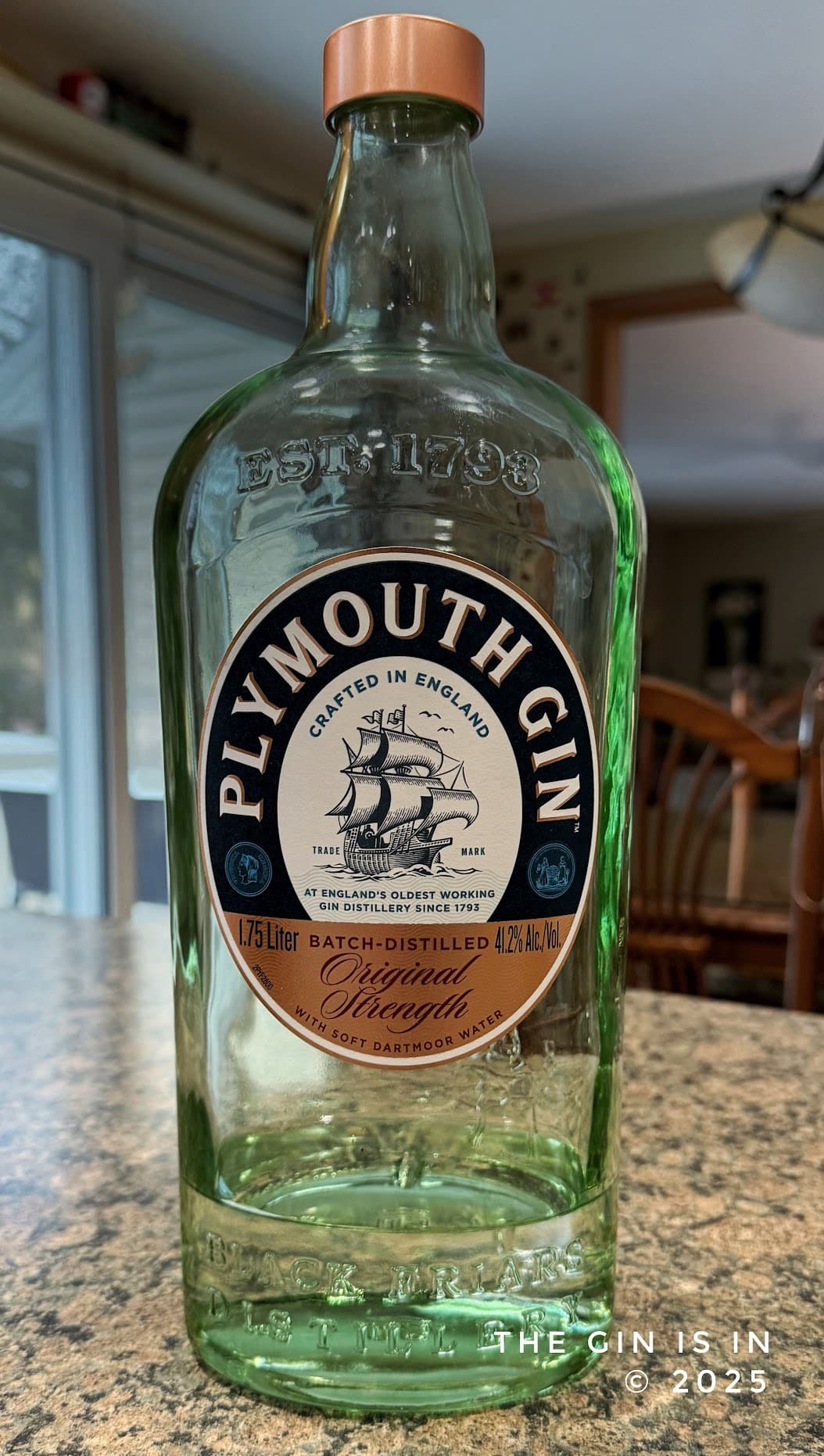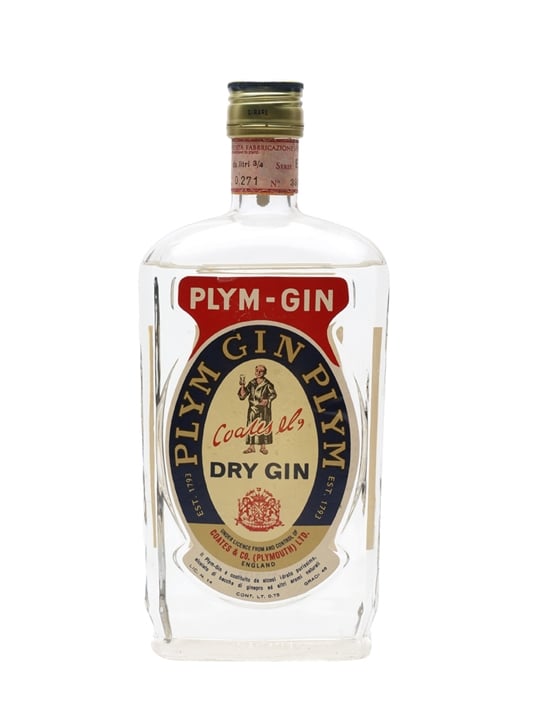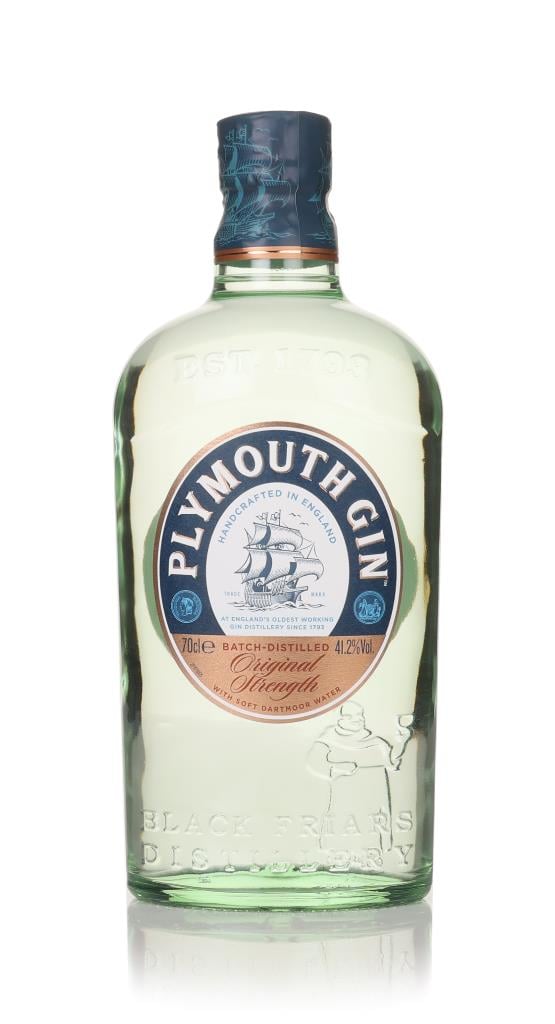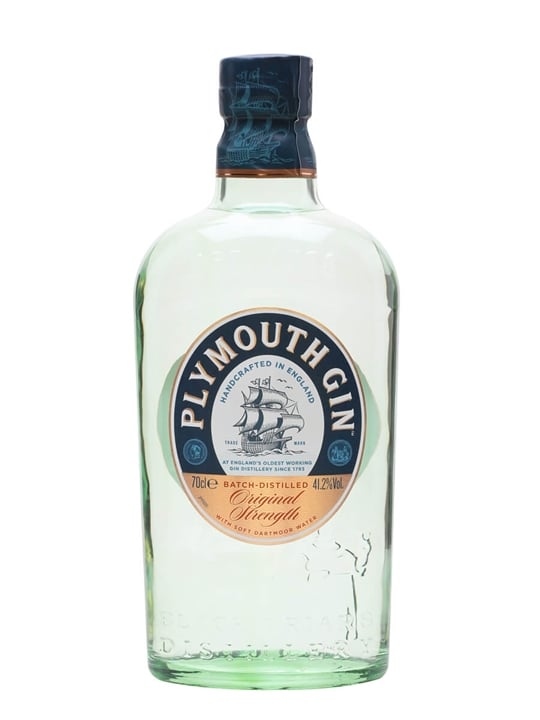
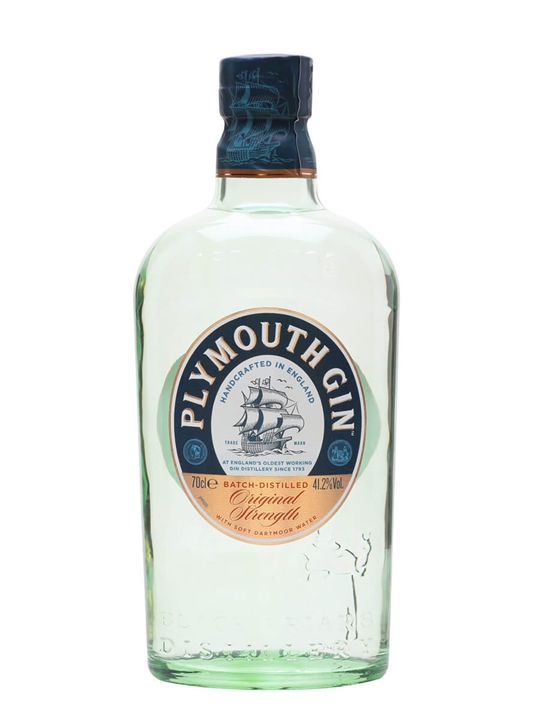

There are few gins in the world that can claim their own legally protected style, and Plymouth Gin Original is the sole surviving expression of one. Distilled at the historic Black Friars Distillery — a building whose roots stretch back to 1431 — this is a gin inseparable from its place. Plymouth is not a London Dry, nor a contemporary reimagining. It is its own category entirely, and this bottle remains the definitive statement of what Plymouth gin is.
A Style Apart
At 41.2% ABV, Plymouth Gin Original sits at a gentle, approachable strength that belies the depth of character within. The botanical bill is classically restrained: juniper, coriander seed, orange peel, lemon peel, angelica root, orris root, and green cardamom. There are no exotic interlopers here, no fashionable additions designed to court the Instagram crowd. This is a gin that trusts its recipe — one that has been refined over centuries rather than conjured overnight.
Character and Category
What distinguishes Plymouth from a London Dry is its softer, earthier disposition. Where a textbook London Dry leads with assertive juniper and a crisp, almost austere dryness, Plymouth has always favoured a rounder, more yielding profile. The citrus peels and cardamom are given room to breathe alongside the juniper rather than being subordinated to it, while the orris and angelica root provide a quietly structural backbone. It is a gin that rewards patience and attention — each sip reveals another layer of considered blending.
Heritage and Craft
I have long held that provenance matters in spirits, and Plymouth Gin is perhaps the purest argument for that belief. The Black Friars Distillery is not merely a production facility; it is a living monument to English distilling tradition. The water, the stills, the very walls of the building contribute something intangible to the character of this gin. To taste Plymouth is to taste a sense of place that no amount of marketing can fabricate.
At around £30, this represents excellent value for a gin of such historical significance and consistent quality. It is not the most complex gin I have encountered, nor does it attempt to be. Its strength lies in its clarity of purpose — it knows precisely what it is and executes that vision with quiet authority. I score it 8 out of 10: a faithful, well-crafted expression of a singular style that deserves its place in any serious gin collection.
Best served: In a classic Gin and Tonic with Fever-Tree Indian Tonic and a generous twist of lemon peel, or as the foundation of a perfectly balanced Dry Martini — a drink for which Plymouth was, quite literally, the original specification.